
/
ShowcaseHigher education space design: the coolest workplaces
Higher education workspaces encompass a range of typologies and formats. From lecture halls, seminar spaces, and administrative offices to ‘sticky campus’ amenities, universities and colleges provide rich opportunities for design innovation.
Across the UK, higher education environments are increasingly focused on creating the right conditions for learning, rather than conventional spaces for teaching. As part of this shift, campus spaces and interiors are converging with workplace design. By embracing key trends and characteristics, such as flexibility, community-building and tech-enabled collaboration, these institutions are being reimagined as vibrant ecosystems, rather than academic-only spaces.
Our top 7 higher educational space designs
Here, we showcase seven of the coolest higher education spaces in the UK.
1/ Durham University Business School
In 2024, Durham University announced the opening of its Business School’s new home, The Waterside Building in Durham city centre. Previously intended for County Council occupancy, the site has been repurposed into a flexible, future-oriented and SKA Gold-rated academic hub that blends sustainability, inclusivity and modern pedagogy. The fit‑out retains core structural elements, reusing key materials and features – glazing, flooring, partitioning – to support the university’s circular economy goals. Collaborative atria, interactive teaching spaces, media suites and a trading lab create a dynamic setting for students and staff. Gender‑neutral facilities, accessible design and wellbeing spaces also reinforce its role as a world‑class, socially responsible business education destination.

Key project info
- Size: 100,000 sq ft
- Location: Durham
- Standout feature: Sustainable adaptation of existing facilities
- Office designer: Overbury
WRKPLC’s verdict
An impressive repurposing project; the design team have gone the extra mile to create a sustainable, accessible and inclusive higher education space.
2/ Buckinghamshire New University
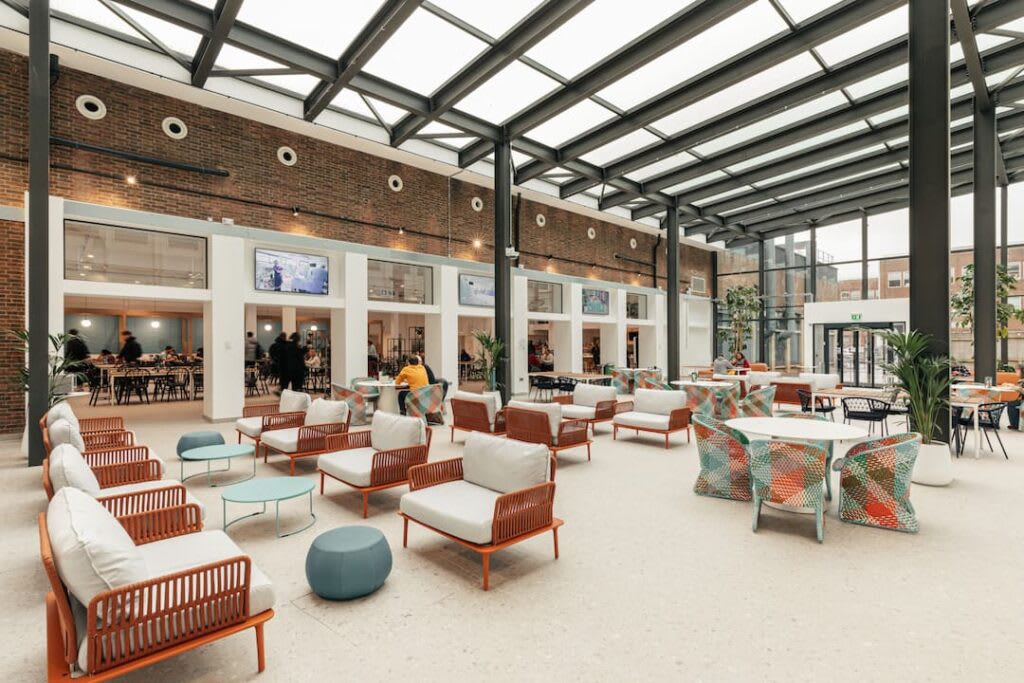
Buckinghamshire New University’s recently transformed campus offers a cohesive, student‑centred environment rich in connectivity and aspiration. Replacing fragmented legacy buildings with a vibrant academic heart, the £20m redevelopment introduces a three‑storey atrium that unifies all student services. There’s also a Winter Garden extension filled with natural light, and a reconfigured reception that anchors the campus experience. Meanwhile, a derelict courtyard has been reimagined into a dynamic social hub, enhancing flow, wellbeing and community. The new campus blends the energy of a contemporary business centre with the warmth of an inclusive educational setting, elevating BNU’s appeal nationally and internationally.
Key project info
- Size: 70,000 sq ft
- Location: Buckinghamshire
- Standout feature: Two-storey glass structure extension of the Winter Garden
- Office designer: Maris Interiors
WRKPLC’s verdict
This stunning redevelopment has created a spacious, light-filled and inspirational educational hub, putting Buckinghamshire New University firmly on the map.
3/ Confetti Institute of Creative Technologies
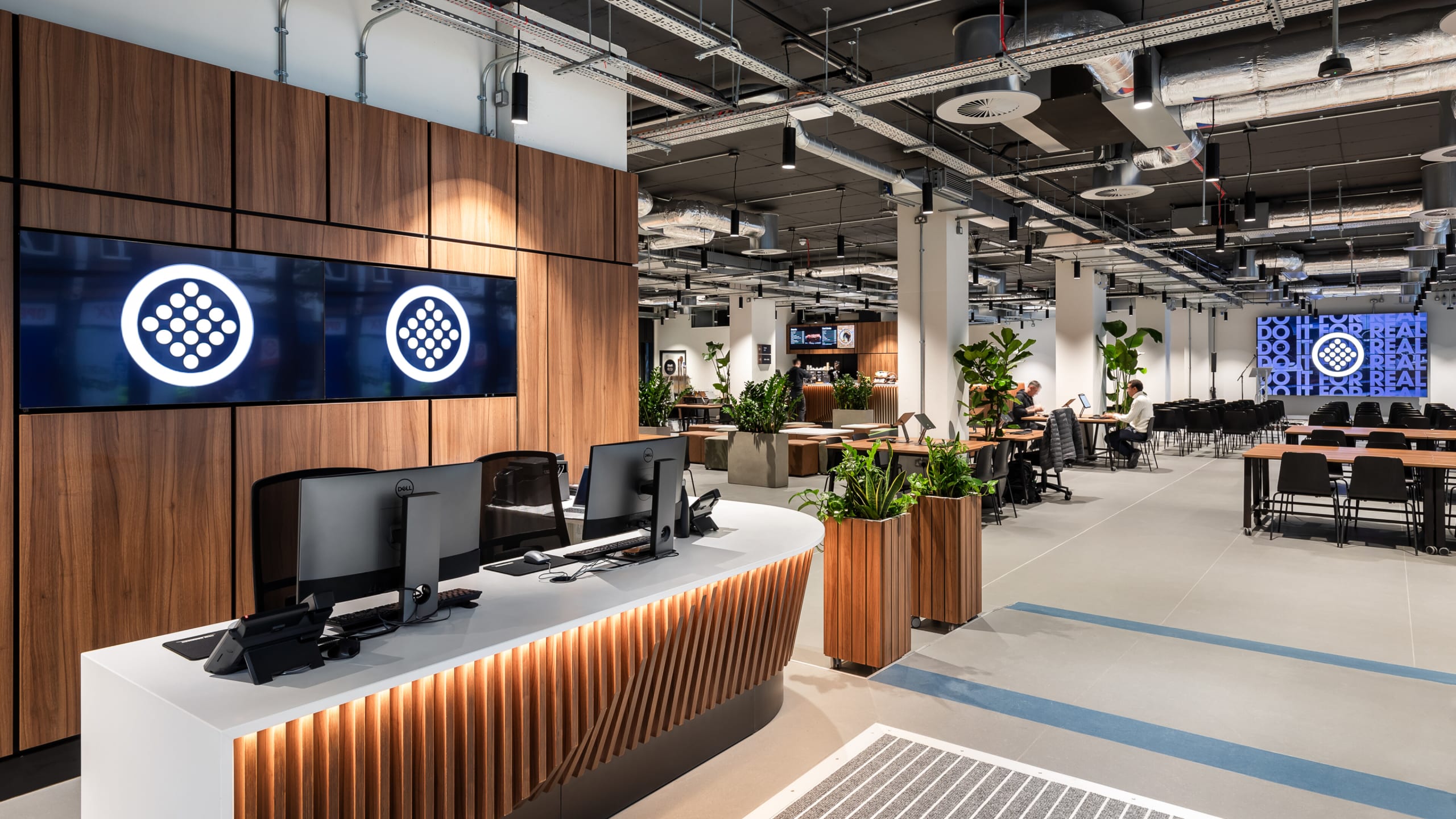
The Confetti Institute of Creative Technologies is a new educational hub located within The Amp, a purpose-built campus in Whitechapel. Offering courses in film, production, music and live events, Confetti is linked to a sister college in Nottingham. The London fit‑out blends timber elements from the Nottingham campus with a bold, urban aesthetic that reflects its new location. Acoustically sensitive studios, Dolby Atmos‑equipped production suites, specialist sound rooms and a 600‑capacity event space give students access to professional‑grade environments. A new mezzanine and feature staircase unify public and teaching zones, creating a dynamic, immersive setting that embodies Confetti’s creative ethos.
Key project info
- Size: 22,400 sq ft
- Location: London
- Standout feature: Cutting-edge audio tech and production suites
- Office designer: Oktra
WRKPLC’s verdict
Confetti’s new London home is a beautifully designed space that blends high-tech facilities with creative energy. The result is a vibrant and professional environment in the heart of London’s creative quarter.
4/ London School of Economics
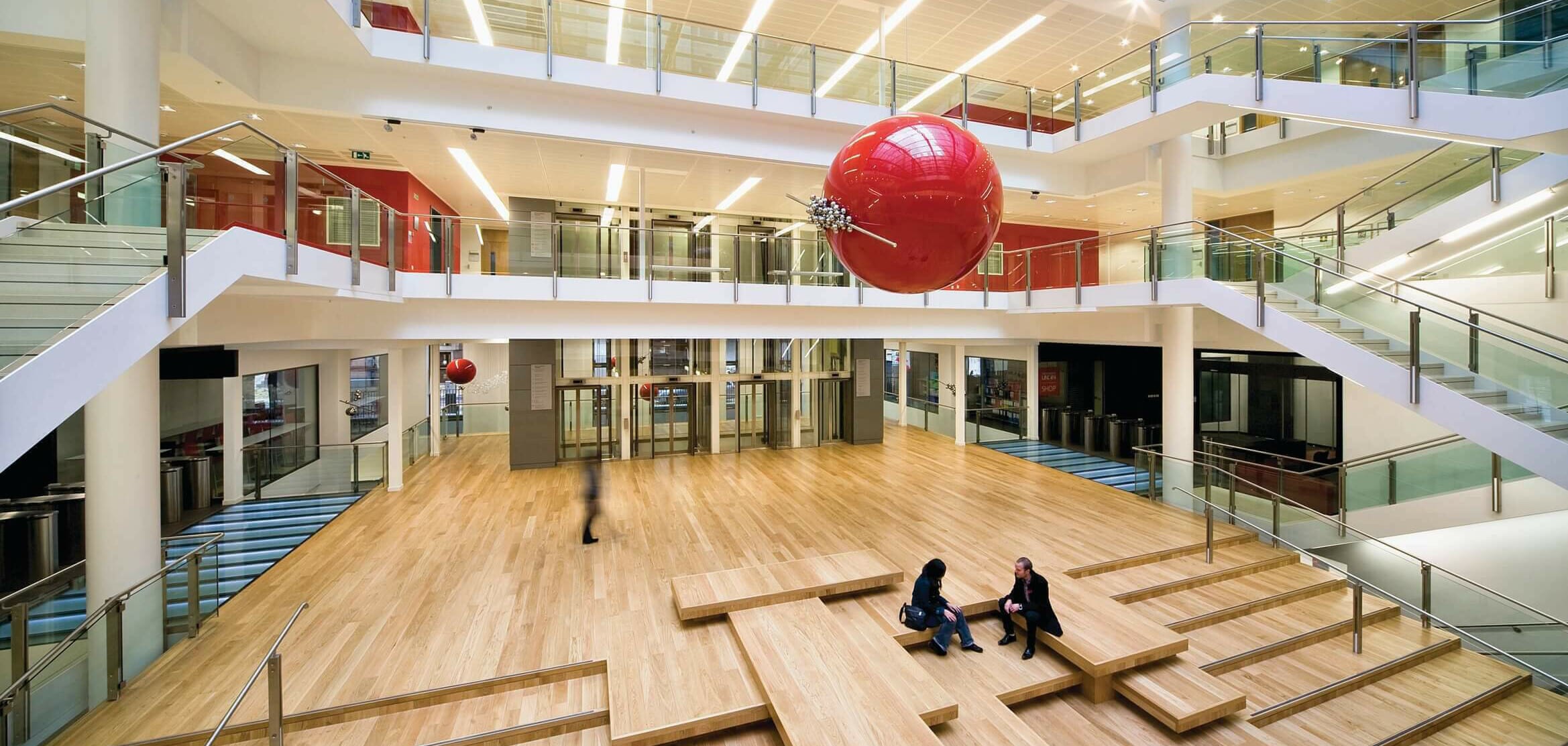
In 2024, London School of Economics (LSE)’s Old Building was reimagined into a modern, sustainable and highly functional academic environment. The retrofit preserves the building’s character while introducing SKA Gold‑certified upgrades, safer infrastructure and flexible spaces that support teaching, research and administration. During the project, phased works kept the building operational, enabling department relocations and service improvements. Structural enhancements, including a redesigned link bridge, have improved circulation and accessibility. The result is a future‑focused, energy‑efficient hub that honours LSE’s heritage while elevating the student and staff experience.
Key project info
- Size: 54,000 sq ft
- Location: London
- Standout feature: Redesigned linked bridge
- Office designer: Overbury
WRKPLC’s verdict
A sensitive and imaginative redevelopment that’s delivered essential upgrades while maintaining Old Building’s historic character.
5/ London College of Contemporary Art
London College of Contemporary Arts (LCCA)’s newly redesigned floor creates a vibrant and modern learning space. The redevelopment introduces a standout new feature: the Gaming Lab, which is inspired by contemporary gaming aesthetics. LED lighting, coding‑themed visuals and dynamic ceiling‑to‑column illumination establish an immersive creative experience, reinforced by custom graphics and branding. The layout mirrors other floors to maintain intuitive student flow, while biophilic elements and abundant natural light support wellbeing and focus. Clever zoning, light finishes and flexible breakout furniture balance capacity with comfort, enabling the space to evolve with LCCA’s growing student community.

Key project info
- Size: 18,734 sq ft
- Location: London
- Standout feature: the Gaming Lab
- Office designer: LOOP
WRKPLC’s verdict
LCCA’s new floor is a great example of experiential design reflecting brand identity. The gaming-themed lighting and visuals are really exceptional.
6/ University of Surrey
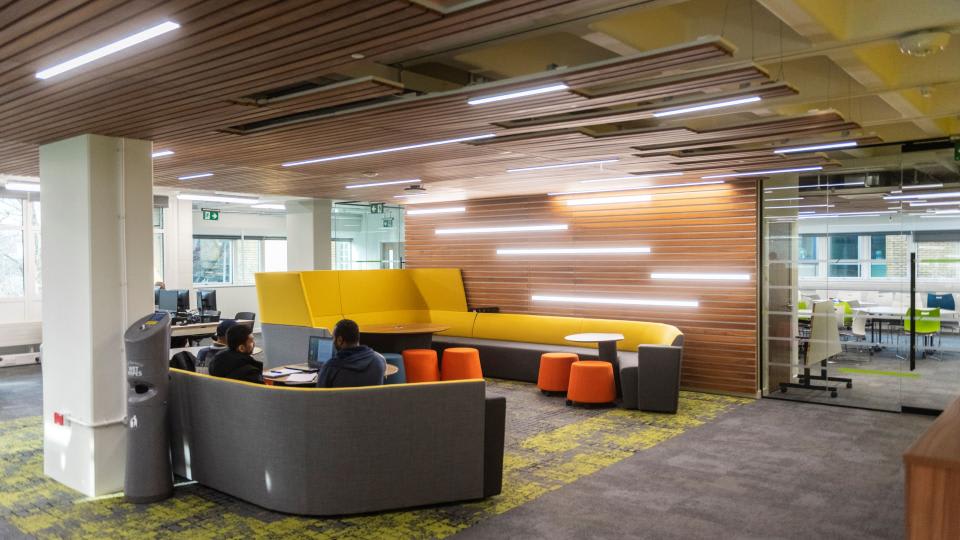
University of Surrey’s new Student Hub has transformed an outdated campus building into a warm, agile and highly collaborative destination for students needing advice and support. The space blends focused study zones, group‑work areas, presentation spaces and quiet rooms for one‑to‑one conversations. Honeycomb motifs, varied floor finishes and flexible layouts create a contemporary, welcoming environment that adapts to student needs. Furniture can be moved and reconfigured to make space for events and receptions, while thoughtful zoning balances privacy with openness. The result is a vibrant, student‑centred hub that enhances wellbeing, service delivery and everyday campus life.
Key project info
- Size: 6,000 sq ft
- Location: Surrey
- Standout feature: Honeycomb motifs and graphics
- Office designer: Area
WRKPLC’s verdict
A contemporary, warm and welcoming student space; provides comfort and style in equal measure. Lovely work.
7/ University of East London
Transforming an underused section of campus, University of East London (UEL)’s new student breakout and events area offers a vibrant, open‑plan social hub. The new development, known as The Pump House, replaces segregated rooms with a flexible, hospitality‑inspired space that supports collaboration, events and everyday student life. Major structural walls have been removed, M&E systems redesigned and feature lighting introduced to create a modern, energising atmosphere. New bi‑fold curtain walling and landscaped external seating blur indoor-outdoor boundaries, enhancing flow and year‑round use. Delivered within a strict four‑week programme, the space now serves as a dynamic focal point for the UEL community.
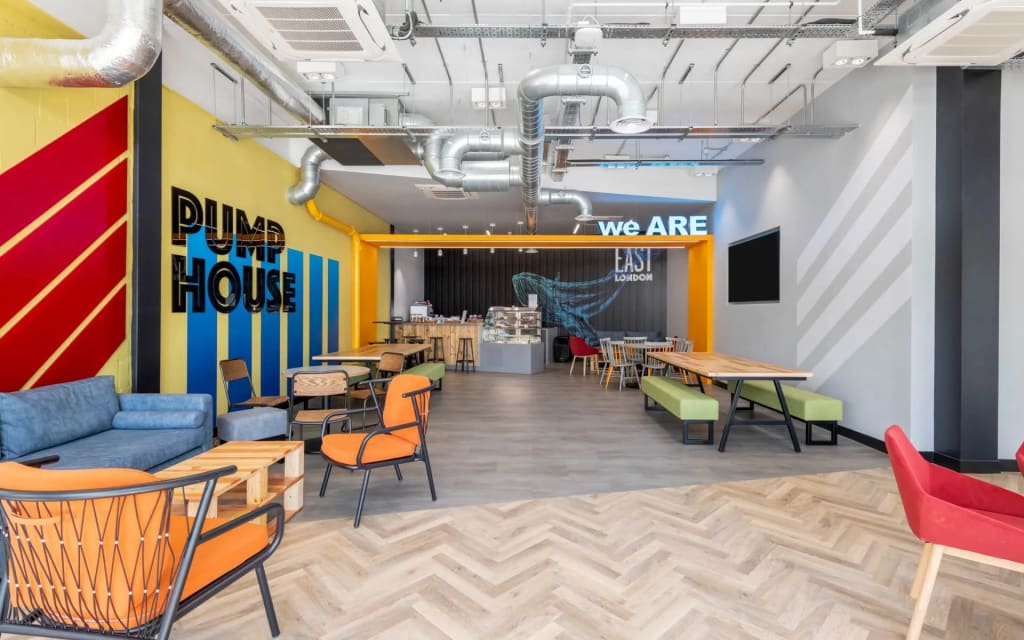
Key project info
- Size: 4,000 sq ft
- Location: London
- Standout feature: Bi-fold curtain wall system
- Office designer: Bloc
WRKPLC’s verdict
UEL’s new student hub shows how imaginative design can revitalise ageing educational spaces and create modern assets with real social value.
Key trends and considerations when designing spaces in the education sector
So, what have we learned from these innovative and cool higher education spaces?
Flexibility and freedom
Flexible designs allow for spatial reconfiguration to accommodate varying class sizes and student requirements. Moveable furniture, sliding walls and collapsable desks and tables mean spaces can be contracted or expanded to support diverse functions and activities. Fluid educational environments also promote creativity and intellectual freedom.
Zoning
Zoning enables education providers to create distinct areas for different functions. Rather than one-size-fits-all teaching spaces, quiet zones, collaborative hubs, maker spaces and presentation areas support different modes of learning. This approach helps to separate focused private study from more communal learning activities.
Texture, colour and materiality
The use of colours can modulate the ambiance of higher education settings. Vibrant colour palettes help to generate creative energy and inspiration, while more muted tones promote focus and calm. Meanwhile, soft wood accents, textures and furnishings convey warmth, making students feel welcome and reassured. Similarly, sustainable materials help to connect students to their surroundings, reaffirming core values and commitments.
Open space
Open, curved and flowing spaces are known to boost focus and engagement, while evidence suggests closed spaces have a negative impact on learning. High ceilings, open-plan areas and curvilinear design boost attention, inspire and excite. They enable expansive thought, concentration and emotional connection – enriching the overall education experience.
Community areas
Through the creation of compelling and dynamic community areas, institutions can attract students onto campus and create a sense of place and identity. Quality community space also encourages interaction between different disciplines and departments, helping to break down silos and barriers to campus cohesion.
Natural elements
By incorporating natural light, inspiring views and biophilic design features, higher education spaces can improve student wellbeing and focus. Natural light creates a sense of clarity, while proximity to nature is known to boost mental and physical health. As such, windows, skylights, plants and greenspaces support positive educational experiences and outcomes.
The ‘sticky campus’
The ‘sticky campus’ concept is about creating a sense of belonging and meaningful connections in a student population. By offering diverse amenities, engaging experiences and high-quality facilities, institutions can attract and retain students. Blending spatial design, community building and support services, the ‘sticky campus’ is designed to make students want to stay on site for longer.
If you’re looking to design an education workspace, get in touch with WRKPLC for expert guidance and advice. You can also download our free Office Design Companies Guide.
People also ask: higher education space designs
The strongest design ideas for higher‑education spaces centre on flexibility, wellbeing, community and technology. In essence, design strategies that create environments that feel more like modern workplaces than traditional classrooms.
Planning a higher education design project starts with understanding end-user needs, analysing how a space is currently performing, and defining the strategic outcomes the university wants to achieve. By adopting human‑centric, flexible and learning‑led design principles, and understanding the importance of data‑driven space optimisation, education providers can begin to map out successful design schemes.
Effective educational space design leads to talent attraction and retention (staff and students) and measurably improves student engagement, wellbeing and academic outcomes. Research shows that well‑designed learning environments can influence 10-15% of academic performance variance
The core design elements in higher‑education spaces centre on flexibility, zoning, wellbeing, sustainability, collaboration and technology integration. See ‘key trends and considerations’ above for more information.
Looking to design a
cool education space?
Discuss your design brief with an expert
By submitting your email address, you agree to our Privacy Policy and Terms & Conditions.


